I’m writing this I take a break from ruining a painting I’d just started.
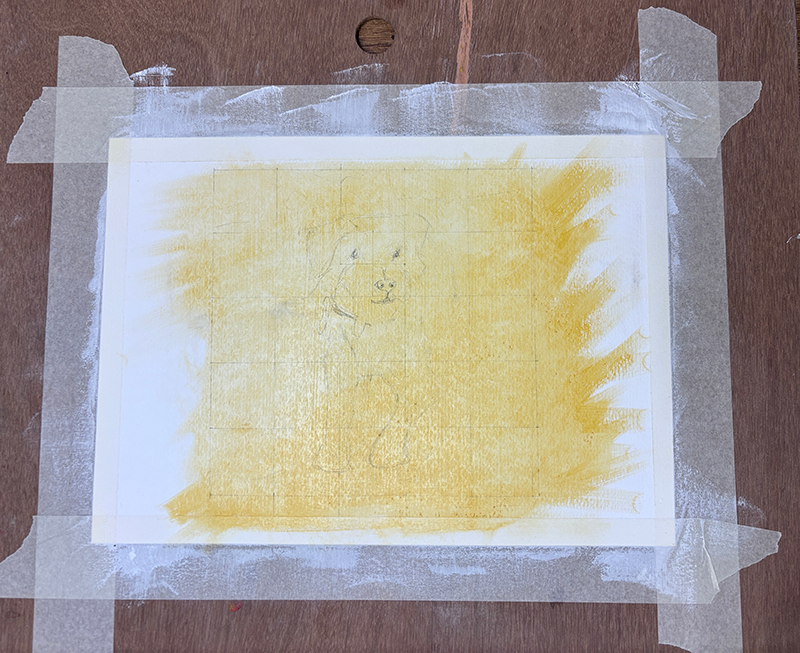
I’d drawn the image in 6b pencil onto heavy paper and completely forgot to gesso it first. The thinned paint soaked straight in and drowned the drawing before I’d got anywhere with it. So I stopped, gessoed five more sheets to make sure I’ve always got primed paper ready, and sat down to write instead.
My Old Dog
So the image I was drawing – my old dog. At the ripe age of 13 he has suddenly gone deaf and it made me realise how old he actually is as he still looks and acts like a pup. So whilst he is still around I thought I would set about painting him.
I am currently re-reading a book about the repetitions Van Gogh made throughout his painting life. It’s a really great book as it details the how’s and the possible ‘why’s’ Van Gogh painted what he did. A technique that was discovered was that Gogh liked to make repetitions and drawings from life using a grid. So I had taken a lovely picture of my dog and drew him on the ‘unprimed’ paper, drowning him in thinner and a touch a raw umber.
I may have ruined this image but what I noticed was how intently I copied him and how I noticed things I hadn’t noticed before. How big his black nose is, how his eyes slightly drop into the friendliest dog eyes. His character is of unbound energy and curiosity without a harmful bone in his body.
The next day I drew him again, on primed paper this time with a successful undercoat of yellow ochre and Liquin. Inspired by Van Gogh I may make 2. One which is realistic, the first sitting. Then I will paint from this painting a second version, a repetition with techniques and colours similar to what I think Van Gogh would use.
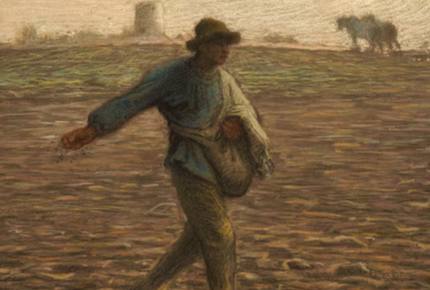
I’m almost finished reading Van Gogh Repetitions, (I’ll add a link at the end if you are interested in acquiring a copy). I also have learnt that Van Gogh was deeply inspired by Jean-Francois Millet, a French artist who specialised and was deeply attached to country life in France. Van Gogh did a few paintings after Millet such as The Sower. It wasn’t a direct replication, however close, and completed in Van Gogh’s style. Before reading this it didn’t occur to me that the greats copied one another. Doing a bit of research it seemed copying one another’s images, either to learn or as appreciation was quite frequent among many. Dali also took inspiration from Millet, as did many impressionists following.
Introduction to Jean-Francois Millet
Millet was inspired by Japanese Wood prints, as Van Gogh was towards the latter end of his painting. In fact there were quite a few references Van Gogh had taken from Millet. Millet was known as The ‘Fauve’ (great beast) of modern art. I started reading ‘Millet and Modern Art’ on Internet Archive (I nearly bought the book but am trying to lessen my consumption of buying!) and the connection between how inspired artists were by other artists is a lot closer than I thought. Millet in return was inspired by Nicolas Poussin. It goes back to the saying ‘Nothing is Original’ by Jim Jarmusch. This is the part that fascinates me. Studying both the visual connection between artists’ way of working but also the meaning behind their work. The hows and the whys.
My Art Progress – Butterfly No.1
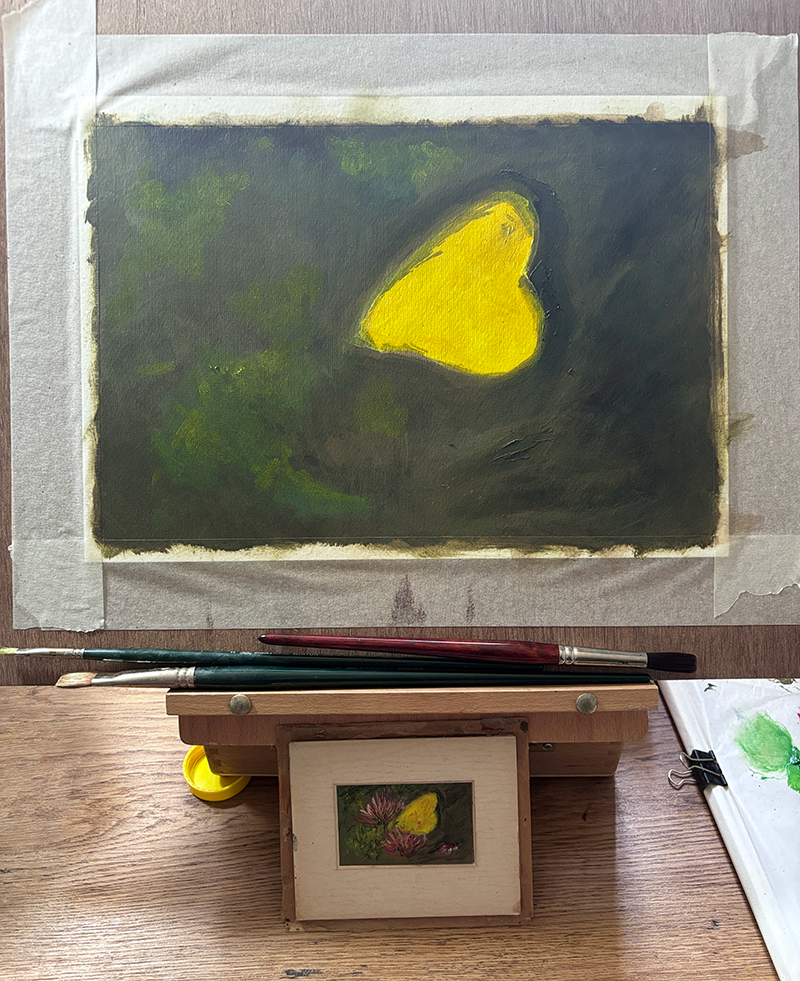
I have also finished Butterfly No.1 which is on my homepage. I was undecided whether it was finished and thought about going into it more and working into it further but I think I will leave it for now. I may come back to it later.
Links to further reading and Watching
Millet and Modern Art.
https://www.biblio.com/book/van-gogh-repetitions-rathbone-eliza-robinson/d/1746147408?srsltid=AfmBOooScd7cU20eHLUbRrXHxm8P8T14XVvdrC1pF3yWlaDcxsmQIV5bMFo
Below is a link to a YouTube video from The National Gallery talking about Nicholas Poussin as ‘The painters painter.
https://www.google.com/search?q=Nicholas+Poussin&rlz=1C5OZZY_enGB1170GB1172&oq=Nicholas+Poussin&gs_lcrp=EgZjaHJvbWUyBggAEEUYOTILCAEQLhgKGAsYgAQyCwgCEAAYChgLGIAEMgsIAxAAGAoYCxiABDILCAQQABgKGAsYgAQyCwgFEAAYChgLGIAEMgsIBhAAGAoYCxiABDILCAcQABgKGAsYgAQyCwgIEAAYChgLGIAE0gEINDIzMWowajeoAgCwAgA&sourceid=chrome&source=chrome.ob&ie=UTF-8#fpstate=ive&vld=cid:c8608e78,vid:3ckw3GAD130,st:0
As I was writing this I received an email from ‘Paint Coach’, a wonderful painter who offers free courses on painting tutorials. This week was about dog paintings so will be worth a watch.
Good bye for now.